
Can Eggnog Be Good For You?
The festive rush is truly upon us and tempting treats lie around every corner.
And yes, while it is good to indulge yourself now and again, this time of year, in all its treat-laden abundance, can begin to stack up against our health goals overall.
So, in an effort to stop things snowballing, here’s a healthy twist on the classic eggnog, a heart-warming and frost-melting drink enjoyed by our ancestors for centuries.
How our ancestors enjoyed their eggnog: What there is to learn from times gone by
Eggnog has perhaps shed the connotations of health it used to have in the past.
Its earliest form, known as posset, was a warm blend of milk curdled with ale or wine, lightly sweetened and spiced. Often given as a remedy for colds or fevers, it occupied a space shared by many other now-bygone elixirs, between medicine and comfort.
By the 16th century, as access to sugar and spices expanded across continents, versions of eggnog became more of a luxury for the wealthy. Ingredients like spirits and nutmeg were expensive and often hard to come by, making the drink a rarity.
Then a more public medical use for eggnog appeared to make a return. In the 18th and 19th centuries “eggnog” found its new Americanised name, and eggnog-style drinks were sometimes medically prescribed to support people who were underweight, malnourished or recovering from illnesses including serious infections, such as malaria.
It was thought that warm milk, protein from eggs, spices for digestion and alcohol to stimulate appetite made it a high-calorie, restorative option. This perspective can largely be translated into modern herbal and nutritional understandings of eggnog, minus the medical use of the alcohol component, which was of its time.
So, the common thread? Eggnog was not designed for everyday consumption, but it was calorie-rich and nutrient-dense, taken in small amounts and often linked to themes of recovery, warmth or even celebration.
How to make eggnog healthy
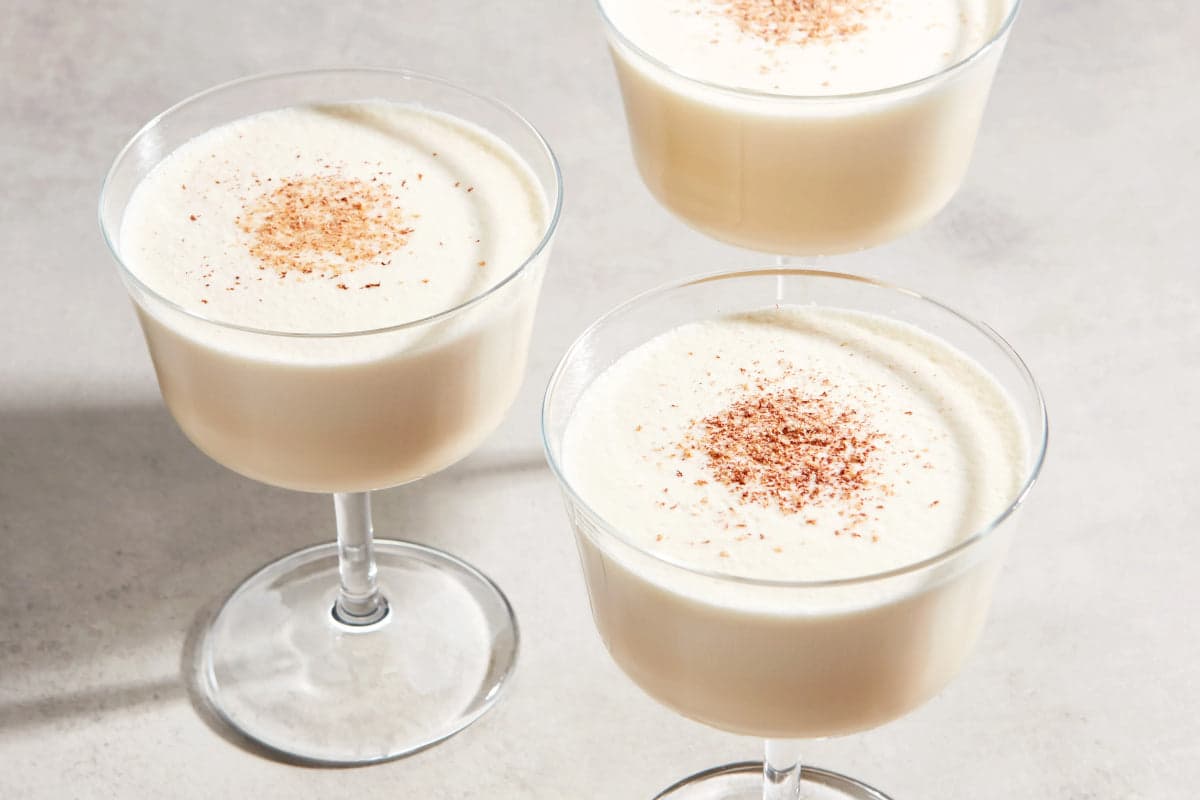
Introducing the ancestral-inspired protein eggnog, a nourishing twist on the classic drink, skipping the sugar, artificial sweeteners and other unnecessary additives that have sadly made their way into modern eggnog products.
This home-made version, packed with nutrients and rich in protein, is perfect for anyone looking to indulge this season, while still supporting their wellbeing.
Not only is it delicious, but every ingredient is chosen for its nutritional benefits, too.
Cocktail shakers at the ready…
The nutritional stars of ancestral-inspired eggnog
**Eggs:**Eggs are the backbone of this protein-packed drink. Rich in high-quality protein, they provide all nine essential amino acids, which support muscle repair and growth. They’re also a source of vitamins D and B12, which play a key role in energy production and bone health. If you prefer a plant-based option, a favourite of many cocktail makers is an ingredient known as aquafaba, derived from chickpeas.
**Protein powder:**Adding a scoop of your favourite protein powder takes this drink to the next level. There is the option to choose a grass-fed whey protein or a plant-based option like pea or hemp protein. What’s more, protein powder helps keep you fuller for longer and can support post-exercise recovery.
**Cashew milk:**For the dairy-sensitive, the rich dairy cream can be swapped for cashew milk, a plant-based alternative. It’s also a source of healthy fats, to support heart health and stabilise blood sugar. If you prefer, you could substitute almond milk, or any unsweetened alternative of your choice.
Manukora mānuka honey: A touch of honey adds gentle sweetness without the refined sugar or artificial sweeteners found in traditional eggnog.Manukora mānuka honey, harvested from remote regions of New Zealand, contains naturally occurring MGO as well as trace bioactive compounds. These properties have been linked to potent antimicrobial properties, immune support and the maintenance of healthy skin.
**Nutmeg and cinnamon:**These festive spices don’t just taste and smell like the festive season ahead; they come with powerful antioxidant properties long-celebrated in the plant medicine traditions of our ancestors. Cinnamon can help regulate blood sugar levels, while nutmeg is traditionally known for treating a variety of digestive ailments, pain and inflammation.
Get creative and use your own festive-themed natural flavourings like star anise or bitter orange. You could even spice things up by whisking in a functional mushroom blend Chai or add some of your favourite alcohol-free elixirs such as Livener or Nightcap by Three Spirit.
Ancestral-inspired protein eggnog recipe
- 2 large eggs (or pasteurised egg whites, if you prefer)
- 1 scoop vanilla protein powder
- 300ml cashew milk (unsweetened)
- 1 tsp pure vanilla extract
- 1–2 tbsp Manukora mānuka honey
- 1/2 tsp ground cinnamon
- 1/4 tsp ground nutmeg (plus a little extra for garnish)
- In a blender, combine the eggs, protein powder, cashew milk, vanilla extract, Manukora mānuka honey, cinnamon, and nutmeg. Blend on high until smooth and frothy.
- Pour the mixture into a saucepan and heat gently over medium heat, whisking constantly, until slightly thickened. Be careful not to boil, as this can curdle the eggs.
- Remove from the heat and allow to cool slightly. For a chilled version, transfer to the fridge for 1 to 2 hours.
- Serve in a festive glass, garnished with a sprinkle of nutmeg on top.
Please note: serving to pregnant people, young children, older adults, or anyone with a compromised immune system is not recommended due to potential exposure to the raw egg white content.
Why choose protein eggnog?
This traditional, ancestrally-focused recipe offers an excellent way to fuel your body during busy festive periods or even after a winter workout.
Whether you enjoy it warm or chilled, protein eggnog is a nutritious way to celebrate the season.
The best bit is that it's that little bit better for you.
So, whip up a glass, toast to good health, and let the festive cheer flow.
ShopEATat Healf this season. Stock up on functional ingredients and kitchen staples that support your everyday wellbeing and help you feel your best from the inside out.
Further reading: The Alcohol Free Picante
Further reading: 3 Ingredient Recipe: Hydrating Spicy Margarita With A Twist
Further reading: Recipe: Almond Snickerdoodle
Further reading: An Iced Tea Recipe To Tackle Hay Fever